
Korvosa Staffords

Finding A Good Breeder
One question we are frequently asked is how to spot an ethical breeder, and just as importantly, how to recognize an unethical one. There is a lot that sets apart an ethical breeder from a backyard breeder and mill. As a part of our commitment to this breed and in support of ethical breeding practices, we are always eager to help guide you towards a good breeder, regardless as to what breed you are looking for.
It is a common misconception that a breeder who raises puppies in their home must be reputable; this is not always the case. A home environment alone does not guarantee ethical breeding practices, there is far more to it! As well, breeding for numerous years, does not equate to ethical breeding practices. In addition, backyard breeders often charge more than ethical breeders. Important considerations when choosing a breeder includes whether the breeder performs appropriate health testing, actively shows or trials their dogs, and breeds dogs at an appropriate age. Let’s explore why these factors matter and what questions we should ask, together!
Why Should I Ask Questions?
Asking questions helps you look past marketing and emotion, evaluating whether a breeder is truly breeding with purpose, responsibility, and the long-term welfare of the dogs in mind. Each question reveals something important. Together, these questions protect you, the dog, and the breed. They encourage ethical breeding practices, promote transparency, and help ensure that any puppy produced has the best possible chance at a healthy, stable, and happy life. Good Breeders won’t just answer your questions, they’ll ask plenty of their own. The goal isn’t to “pass” a test, but to make sure the dog, the home, and the breeder are the right fit for one another and have similar ideals for what they expect from each other.

Breeding Purpose & Philosophy
The following questions reveal whether the breeder is intentional and breed-focused, or just producing puppies. A thoughtful answer shows the breeder understands genetics and structure. They are intentionally pairing dogs to improve or preserve the breed, and are knowledgeable on pedigrees, not breeding randomly or for convenience. Click here to learn more.
-
Why did you choose this breed?
-
What are you trying to improve/preserve in your program?
-
Why did you choose this specific pairing?
-
What do you like most about each parent, and what faults are you hoping to balance?
Green Flags of a Breeder

Parent dogs titled in show and sport.
Breed to the breed standard.
Health testing to OFA standards.
Will take back any dog they have produced.
First set of vaccinations at 8 weeks,
Provide health testing/title paperwork on request.
Registered puppies.
Knowledge of pedigrees.
Limited, planned litters.
Volhard temperament test puppies.
Raise puppies with Puppy Culture.
Do Early Neurological Stimulation on puppies.
Lifelong support to puppy families and dogs.
Have social and outgoing puppies.
Eager to educate others about the breed.
Comprehensive application process.
Are involved with their national breed club.
Take time off work for whelping and early care.
Feeds a high quality food to all dogs.
Would like updates throughout the dog's life.
Has a breed mentor and/or mentees.
May say "no" to an applicant.
Wont breed dogs under 2 years of age
Puppies are matched to homes, not picked by color or first come/first served.
swipe to see red flags
Spotting Puppy Farmers
When people hear the term "puppy mill," they often picture overcrowded cages, dogs bred repeatedly with little veterinary care, and animals spending their entire lives in poor conditions. While facilities like this still exist, commercial dog breeding has evolved. Many modern commercial breeding operations present a polished, professional image, yet their primary objective remains producing puppies on a commercial scale rather than preserving or improving a breed through thoughtful, selective breeding.
Unlike ethical breeders, whose goal is to improve the health, temperament, structure, and longevity of a specific breed, commercial breeders are typically driven by consumer demand and production volume. These operations vary widely in appearance and management. Some operate from large, purpose-built facilities housing numerous breeding dogs and producing multiple litters of various breeds or mixes simultaneously. Maintaining these facilities, staffing them, and caring for a large breeding population requires significant financial investment, making high puppy sales necessary to sustain the business.
Others operate from a home environment but place the majority of their breeding dogs in guardian homes. These breeders may have multiple breeding dogs listed on their website, despite the dogs living with other families. Under this model, the breeding dogs are returned to the breeder for mating, whelping, and raising their litters before returning to their guardian homes. Guardian homes do not own the dog until after breeding is complete, often bred 4 or more times.
Whether its a Guardian Home or facility, they often have puppies available throughout the year and generally repeatedly use the same stud dogs within their own program. Breeding dogs are often bred under 2 yrs of age, lack completed health testing, and are not titled. When breeding decisions are driven by convenience and production goals, there is less emphasis temperament, health, etc.
A responsible breeder invests considerable time and resources into evaluating their breeding stock before producing a litter. This includes health testing, titling dogs in conformation or performance events, and careful selection of breeding pairs based on their ability to improve the breed, typically using outside studs. Without these investments, a breeder has failed to demonstrate that breeding decisions are being made with the long-term welfare and preservation of the breed in mind. Ethical breeders will utilize "co-ownership" agreements with puppy families, where both parties own the dog. The breeder is held to high standards within the contract, they are responsible for all breeding, showing, trialing and whelping costs and will raise the litter. While there are similarities with Guardian Homes, the key difference is the investment the ethical breeder makes by proving their dogs and that both parties own the dog.
Where Do I Find Breeders?

National breed clubs are the best place to start your search for a dog breeder because the clubs promote responsible breeding practices and prioritize the long-term health and temperament of the breed. Breeders affiliated with these clubs typically follow strict codes of ethics, complete recommended health testing, and focus on preserving breed standards rather than producing puppies for profit. This makes breed clubs a more reliable and educational starting point than random online listings or ads. However, you still need to ask the aforementioned questions and do your due diligence to confirm that a breeder’s practices meet ethical standards. In Staffords, the national breed club is the Staffordshire Bull Terrier Club of Canada.
Why are the Green Flags & Questions Important?


Conformation Championship
A championship title isn’t about creating a “show dog.” It’s about verifying correct structure, movement, and overall soundness through evaluation multiple, knowledgeable judges from around the world. These traits directly impact a dog’s long-term health, comfort, and mobility even as a family pet. Correct structure helps reduce the risk of injury, joint issues, and chronic pain as a dog ages. Poor structure, even in a pet-only home, can lead to real quality-of-life problems and high vet bills.
Titles aren’t about ribbons, or ego, they’re third-party proof that a breeder is prioritizing function and breed integrity, not just producing puppies. Breeders don't make money at dog show or sports, but we do spend it on entry fees, and traveling! Remember, "show dogs" are only that for a short period of their life, they are beloved family members who simply have a side hobby. They live life just like any other dog.
Breeders are proud of their dogs' show records and will happily send you a copy of their dog's show record and championship title. In Canada, a dog's show record can be found posted on Canuckdogs.
Breeding to the Standard
Breed standards describe a breed's ideal structure, movement, temperament, drive and overall balance. Breeding consistently is how different breeds of dogs were created, and the breed fanciers establish a standard for breeders as a guideline. Judges are then trained to evaluate dogs against this standard. Showing helps breeders confirm that their dogs closely match what the breed is intended to be, helping preserve correct type over generations.
Please Note: The terms teacup, micro, and exotic are backyard bred terms and are not related to any breed within a recognized kennel club. These terms are used to describe off standard dogs, and advertised as highly desirable by backyard breeders.
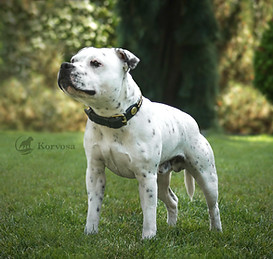
When looking at any breeder, it is important to read the breed standard and also look at their dogs. In Staffords, if you see breeding dogs that have floppy ears like a golden retriever, full prick ears like a doberman, or a stafford with face wrinkles like a pug, these are all descriptions of an out of standard Stafford that should not be bred. To read the Staffordshire Bull Terrier standard, click here. The most common red flag is a breeder promoting or purposely breeding colours not found in a standard, meaning it was bred in from another breed.


Health Testing
Health testing dogs to Orthopedic Foundation for Animals (OFA) standards is a critical component of responsible breeding, as it helps identify and reduce the risk of hereditary diseases within a breed. OFA testing provides objective, standardized evaluations for conditions such as hip and elbow dysplasia, cardiac disease, eye disorders, and other breed-specific health concerns. This is far more comprehensive screening than a vet check can provide and generally costs about $1000 per Staffordshire Bull Terrier.
By testing breeding dogs and making results publicly available, breeders demonstrate transparency and accountability while making informed decisions that prioritize long-term health, soundness, and quality of life. Adhering to OFA standards not only protects future generations of dogs but also gives puppy buyers confidence that their breeder is committed to ethical practices and the overall improvement of the breed.
There's no reason for a breeder to withhold results prior to paying or obtaining a puppy. By providing documentation, it confirms claims and helps to distinguishes responsible breeders from unethical ones. A list of health screenings that all Stafford breeders should perform can be found here.
Please note: OFA elbows and Hips cannot be completed until the dog is 2 years of age. PENNHIP, an alternative hip screening, can be done no earlier than 4 months old. This goes for any breed.
Raising Puppies
A good breeder will invest significant time, expertise, and resources into raising puppies in a manner that prioritizes health, temperament, and long-term well-being. Puppy rearing at this standard is a hands-on, labor-intensive process designed to prepare each puppy for a successful transition into a lifelong home. This level of care typically includes:
-
Round-the-clock care during the neonatal period, ensuring puppies receive constant supervision, proper nutrition, and a clean, safe environment.
-
Early Neurological Stimulation (ENS) to support healthy neurological development and stress resilience.
-
Structured developmental monitoring, including careful weaning practices and observation of physical, emotional, and behavioral milestones.
-
Veterinary and medical care, including regular health checks, deworming every two weeks from birth, an initial vaccination series, and a comprehensive examination by a licensed veterinarian.
-
Evidence-based rearing programs, such as Puppy Culture or comparable protocols, to promote stable temperaments and positive learning experiences.
Ethical breeders recognize that producing puppies at this level of care cannot be scaled without compromising animal welfare. As a result, they intentionally limit litter numbers to ensure each puppy receives individualized attention and proper developmental support. Ethical breeders also adhere to best practices regarding placement timing and will never rehome a puppy before eight weeks of age. Their responsibility does not end at placement; they provide ongoing guidance and support to puppy buyers and remain committed to the well-being of every dog they produce for the duration of that dog’s life.


Knowledge of Pedigrees
All breeder should have a thorough understanding of a dog’s pedigree. A pedigree is more than a family tree, it provides critical insight into inherited health, temperament, structure, and overall breed type. A pedigree allows breeders to identify patterns across generations, including strengths to preserve and weaknesses or genetic conditions to avoid repeating.
This knowledge helps guide responsible breeding decisions, such as selecting compatible pairings, maintaining genetic diversity, and avoiding the concentration of hereditary diseases. Understanding pedigree history also helps predict what a dog is likely to produce, supporting the long-term health, consistency, and preservation of the breed.
Ultimately, understanding a dog’s pedigree supports responsible breeding practices focused on preserving the breed’s integrity, health, and temperament over time. A red flag would be a breeder who only breeds dogs within their own program, not utilizing outside pedigrees, or a breeder who doesn't know their pedigrees inside and out.
Working and Sport Titles
It is important for ethical breeders to title their dogs in performance sports, such as obedience, because these titles demonstrate that a dog possesses the temperament, intelligence, trainability, and soundness expected of the breed.
Earning titles requires a dog to perform reliably under distraction, handle pressure, and work in partnership with a handler—all indicators of a stable, biddable temperament that is highly desirable to pass on to future generations.
Performance titles also provide independent, objective evaluation beyond the breeder’s own opinion, confirming that the dog is functionally capable. By proving their dogs in sports, ethical breeders show a commitment to preserving the breed’s purpose and versatility, not just appearance. Remember what the standard says, Staffords are the foremost all-purpose dog!

Don't Breed for Colour
Breeding animals solely or primarily for colour is widely discouraged by veterinarians, geneticists, and ethical breeders because it prioritizes appearance over health, temperament, and structure. While it's ok to have a preference on coat colour, an excessive focus on colour can lead to serious genetic, physical, and ethical consequences for the animals themselves.
Responsible breeding aims to improve each generation, but colour-focused breeding shifts attention away from overall health, sound structure, and stable temperament. Over time, this increases the prevalence of inherited disorders and reduces overall quality of life for the animals produced. This is commonly seen in blue Staffordshire Bull Terriers.
Some coat and pigment genes are directly associated with health risks. For example:
-
Double merle dogs (dogs have received two copies of the merle gene, one from each parent) have a significantly increased risk of deafness, blindness, and/or malformed eyes.
-
Extreme white or piebald patterns are linked to hearing loss due to lack of pigment in the inner ear in many breeds.
-
Dilution genes, like blue, can cause chronic skin conditions, hair loss, and increased sensitivity to infection.
Breeding specifically to achieve these colours raises the likelihood that offspring will suffer from these preventable health conditions.
The demand for “rare,” “exotic,” or trendy colours often fuels unethical breeding operations, including puppy mills and backyard breeders. These breeders may:
-
misrepresent colour rarity to inflate prices,
-
misrepresent out of standard colours as rare,
-
skip health testing,
-
breed animals too frequently,
-
prioritize profit over welfare.
This commodification of animals reinforces irresponsible ownership and undermines public understanding of what ethical breeding truly entails.
While colour can be a natural variation within a healthy population, it should never be the driving force behind breeding decisions. Ethical breeding prioritizes health, temperament, genetic diversity, and functional soundness, treating colour as a secondary outcome rather than a goal.
In Staffordshire Bull Terriers, you do not want to see blue x blue pairings, or numerous blue dogs in a pedigree. Most pedigrees of Staffords are listed on www.sbtpedigree.com. It is rare to come across an ethically bred blue stafford in a breeding program.
Don't Have Puppies Readily Available
Ethical breeders usually don’t have puppies readily available because their goal is to breed responsibly, not to produce a constant supply. Ethical breeders often have long waiting lists because:
-
They produce fewer puppies.
-
Properly raising a litter takes significant time.
-
Informed buyers actively seek them out.
-
High demand combined with limited litters
-
Bitches are not bred until 2 years of age when they are finished growing, amd generally are only bred a few times.
A good breeders focus on the long-term health, welfare, and improvement of their breed rather than convenience or profit. As a result, they rarely have puppies immediately available and often maintain waiting lists. This lack of constant availability is not a flaw in ethical breeding; it is a direct result of responsible practices.
Responsible breeders plan litters carefully. Each breeding is done for a specific purpose, such as improving health, temperament, or structure within the breed. Litters are typically produced only when:
-
Both parents have passed health testing.
-
The bitch has recovered well from any past litters.
-
Both parents have earned titles.
-
The pairing is expected to improve the breed.
-
The breeder has the time, resources, and support to raise the litter properly.
-
Have families on a wait list.
Unlike commercial breeders, ethical breeders do not breed dogs “on demand”. Ethical breeders keep a small number of breeding animals so each one receives proper care, training, and socialization. This naturally limits how many litters can be produced in a year. Many ethical breeders may only breed one litter a year, but it isn't unheard of for them to take multiple years off of breeding. This ensures the physical and emotional wellbeing of the dogs in the breeding program.
A lack of readily available puppies is one of the strongest indicators that a breeder is ethical. It reflects careful planning, respect for the dogs, and a commitment to producing healthy, well-adjusted companions rather than a constant product for sale. In ethical breeding, waiting is not a disadvantage, it is part of doing things right.
To see how many puppies a breeder has produced in previous years, you can check the CKC stud books.